
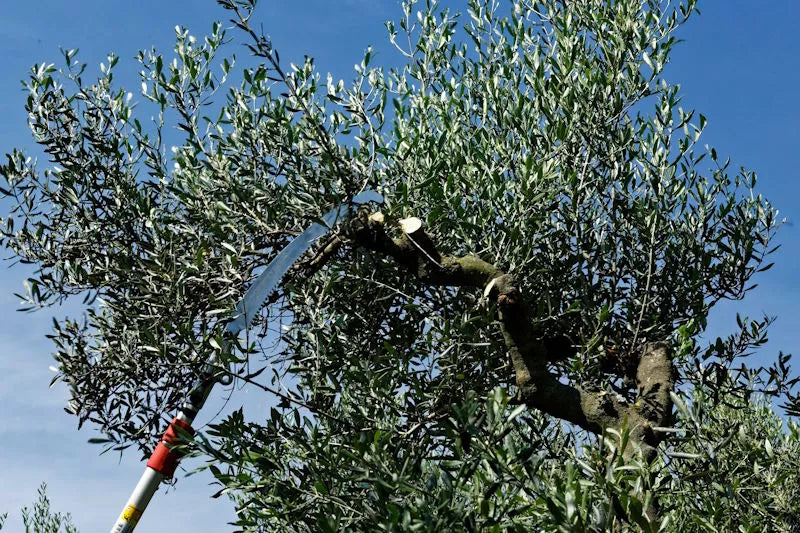
Olive tree pruning is a fundamental practice for the care of these ancient trees, which are symbols of agricultural and Mediterranean tradition. It not only improves the tree's health but also affects the quality and quantity of olive production. Although it may seem like a simple operation, pruning requires knowledge, experience, and a good deal of attention. In this article, we will explore the various types of olive tree pruning and the importance of each.
Why Prune Olive Trees?
Olive tree pruning is important for several reasons:
- Tree health: Removing diseased or damaged branches helps prevent diseases and insect damage.
- Facilitating harvest: Well-executed pruning makes the tree more accessible, facilitating olive harvesting.
- Improving production: Pruning stimulates the formation of new productive shoots, improving the quality and quantity of olives.
- Controlling growth: Regulating the tree's shape allows for better management of its development, preventing it from becoming too large or unruly.
When to Prune Olive Trees?
Winter pruning (November to February): This is the ideal period for more drastic pruning, when the tree is dormant. Dry, diseased, or damaged branches are removed, and the tree's shape is sculpted.
Types of Olive Tree Pruning
There are different types of pruning, each with a specific objective. Here are the most common:
1. Formative Pruning
Formative pruning is carried out in the olive tree's early years to establish a solid and well-balanced structure. The goal is to encourage harmonious tree growth and a good distribution of the main branches. Typically, the central part of the plant is removed, creating a canopy that can be easily reached during harvest.
2. Productive Pruning
This type of pruning is performed on adult olive trees with the aim of improving production. Dry branches and excessive shoots are removed, and productive branches are shortened to encourage the growth of new buds. Adequate productive pruning stimulates the growth of branches with a greater fruiting capacity, improving both the quality and quantity of the olives.
3. Rejuvenation Pruning
Over time, older olive trees may begin to lose productivity. In these cases, rejuvenation pruning is used. The goal is to eliminate old and diseased branches and stimulate the growth of new young branches, which will restore the tree's productive capacity. This involves decisive action, including removing inner branches and promoting the formation of new shoots.
4. Replacement Pruning
This technique is used when some productive branches are damaged or have stopped bearing fruit. Instead of letting the tree continue to grow without a good productive branch, old branches are replaced with new shoots. These new shoots are pruned and shaped to take over the function of the now less productive branches.
5. Sanitary Pruning
Sanitary pruning is aimed at removing damaged, dry, or diseased branches. The main function of this pruning is to protect the plant from diseases and pests. Diseased or damaged branches are promptly removed to prevent pathogens from spreading to the rest of the tree.
Pruning Techniques
When it comes to pruning techniques, attention must be paid to some crucial aspects:
- Correct cut: It is important to make clean cuts to avoid damage and reduce the risk of infections. Cuts should be made close to the main branch, without leaving stubs.
- Using the right tools: Well-sharpened pruning shears, saws, and other specific tools are essential for a good job. Poor or poorly maintained tools can damage the tree and prevent proper healing.
- Do not over-prune: Although pruning is important, excessive cutting can compromise the olive tree's health. It is better to proceed with moderation and never remove more than 30% of the canopy in a single session.
Olive tree pruning is not just a matter of aesthetics: it is a fundamental agricultural technique for the health of the tree and the quality of production. Knowing the various types of pruning and knowing when and how to intervene is essential to ensure a good yield, a healthy tree, and balanced growth. Remember, every olive tree is unique, and well-executed pruning is an investment in the future of the olive grove.
Share:
How to Choose the Best Extra Virgin Olive Oil: A Guide to Liquid Gold
First prize 'Olio delle Sirene'